
On the eve of director Alfred H. Barr, Jr.’s pioneering 1936 exhibition Fantastic Art, Dada, Surrealism, The Museum of Modern Art announced the arrival in its library of two extraordinary collections of Surrealist literature—those of Paul Éluard, the French poet and a central figure of the Surrealist movement, and Camille Dausse, a Parisian doctor and friend to many poets and artists from the group. These Surrealist materials constitute two founding collections of the Library. The publicity surrounding the Library’s acquisition helped frame discussions of Surrealism in the New York press, initiating debates on the merits of the controversial art movement that continued through that winter, thanks to Barr’s exhibition.
Comprising almost seven hundred books, magazines, exhibition catalogues, manuscripts, tracts, pamphlets, and other ephemera, the materials and the geographic scope of the Éluard-Dausse Collection parallel the print culture of Surrealism itself. From the United States to Japan, Surrealist writers, artists, and filmmakers explored dreams and the unconscious, issued political tracts as often as artistic statements, and used the printed page as a site of aesthetic expression equal to the gallery wall. The acquisition, paid for by the chairman of the Museum’s Library Committee, William P. Chrysler, Jr., provided the new department with its formative collection, significantly increasing its holdings in a diversity of forms and genres—from livres d’artistes and automatic drawings to gallery invitations and press clippings—and satisfying the Committee’s self-imposed directive to document contemporary art in nontraditional ways. By actively pursuing primary sources and some of the more fugitive traces of contemporary artistic practice, the Library Committee developed an approach to modern art resources that has remained the blueprint for collections to this day. The question posed by the first Committee—how to make a modern art library?—continues to be answered by the Éluard-Dausse Collection and others like it.
Soon after Iris Barry became the Museum’s librarian in 1934 strategies for meeting the unique challenge of making a modern art library became the focus of conversation for the new Library Committee, whose membership included Alfred H. Barr, Jr., Philip Johnson, and William P. Chrysler, Jr. With Barry’s modernist vision and Chrysler as its most active fundraiser, the Committee hoped to purchase a collection that would attract publicity and include ephemera and other nontraditional material necessary to document contemporary art. When the Surrealist art dealer Julien Levy alerted them to the availability of Camille Dausse’s Bibliothèque surréaliste, the Committee immediately secured the services of Parisian gallerist Jeanne Bucher to act as agent in the sale.
With the Library’s goals in mind, Bucher soon located a second collection, that of acclaimed Surrealist poet Paul Éluard, that had an even greater emphasis on ephemera. Chrysler, then chairman of the Committee, offered to pay for both collections himself, hoping to inspire similar donations in the future. When the material arrived in New York in the fall of 1935, the Committee and the new librarian, Beaumont Newhall, initiated plans to mount an exhibition and publish an illustrated catalogue of the newly combined Éluard-Dausse Collection—neither of which came to pass. Despite the fact that much of the ephemera was later destroyed in a fire, the collection remains one of the most comprehensive contemporaneous collections of Surrealism in print.
Éluard, born Eugène Grindel, was one of the central figures of Surrealism, having cofounded the movement in 1924 with André Breton, Louis Aragon, and Philippe Soupault. Composed during World War I, Le Devoir, the poet’s fourth book, marks the first use of his pen name. The Éluard-Dausse Collection contains most of the poet’s literary output, documenting his involvement with Dadaist and proto-Surrealist magazines such as Littérature and Proverbe and some extremely rare works of his poetry in Dors (1931) and Au défaut du silence (1925).
Doctor to many artists and poets and a regular at the Surrealist salons, Camille C. D. Dausse was also an art collector who wrote for Boris Souvarine’s journal Critique sociale with Georges Bataille and Michael Leiris. Among the notable items in his library were Man Ray’s Revolving Doors (1926), Surrealist drawings by Georges Bataille, Max Ernst’s Histoire naturelle (1926), a manuscript by Robert Desnos, Salvador Dalí’s La Femme visible (1930), and several livres d'artistes illustrated by André Masson, including a rare copy of Louis Aragon’s Le Con d’Irène (1928), now in the Museum’s collection of prints and illustrated books.

News clippings from the A. Conger Goodyear Scrapbooks, 1936. The Museum of Modern Art Archives, New York.
Other avant-garde movements sought to break away from the past, but the Surrealists forged new ground while actively aligning themselves with literary ancestors. The Éluard-Dausse Collection reflects this self-conscious genealogy despite the Library Committee’s plan to sell off “potentially embarrassing” works of 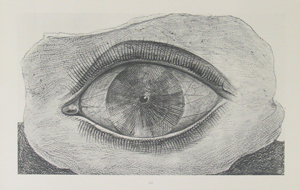 a purely literary or libertine nature. The Surrealists’ veneration for the disordered imaginations of the Comte de Lautréamont and Arthur Rimbaud is evident in countless articles, books, and tracts in the collection. Fantastic and visionary literature was another influence, exemplified by translations of Lewis Carroll and William Blake—both of whom were included in Alfred H. Barr, Jr.’s 1936 Surrealism exhibition. The experimental writing of Raymond Roussel, Alfred Jarry, and Guillaume Apollinaire were more contemporary inspirations. At the Museum, the collecting of literary sources continued to play a part in the development of research collections for some time, especially at the new Film Library, which Iris Barry assumed directorship of in 1936, leaving the Museum Library.
 The Library holds first editions of major works such as Paul Eluard’s Répétitions (1922), Alfred Jarry’s Ubu Roi (1897) and related publications, Leonora Carrington’s La maison de la peur (1938), and René Crevel’s Mr. Knife, Miss Fork (1931), among over 300 additional literary works.
Additional highlights include Max Ernst’s novels-collages Les malheurs des immortels (1922), La femme 100 têtes (1929), Rêve d’une petite fille que voulut entrer au Carmel (1930), and Une semaine de bonté ou, Les sept éléments capitaux (1934).
The Library also holds several works by Robert Desnos, including a 1927 manuscript related to Man Ray’s film L'Étoile de mer (1928), and Night of Loveless Nights (1929), composed of original automatic drawings.
Images: Max Ernst, Histoire naturelle. Paris: Éditions Jeanne Bucher, 1926.
Library Committee members Philip Hofer, of the Morgan Library, and Helmut Lehmann-Haupt, of Columbia 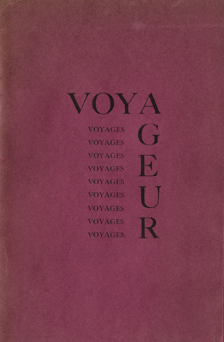 University, brought attention to the book arts, helping to plan exhibitions and establish connections with rare book dealers abroad. When the Committee acquired the Éluard-Dausse Collection, however, it did so primarily for its documentary value, not for the aesthetic quality of the publications. Surrealist books lack the cohesive style of Constructivist or Bauhaus publications, tending to be small, inexpensive items with cheap illustrative processes and retrogressive, classical design. Many of the volumes in the Éluard-Dausse Collection contradict that norm; and yet their value stemmed from the fact that they were primary sources not only of theoretical and poetic content but also of “living” artworks, not then available in textbooks or on museum walls. At a time when reference guides for art libraries were unreliable in the area of contemporary art, the Éluard-Dausse Collection helped correct misinformation while playing a role in the Museum’s endeavor to document the art of its time.
Image: Louis Aragon, Voyageur. 1928
Selected artist books highlights below:
In the May 1936 issue of the Museum Bulletin, the new MoMA librarian, Beaumont Newhall, articulated the Library Committee’s belief that the single most important function of the Library was to document “present-day art production” through the collection of “fugitive” material, or ephemera. Although Dr. Dausse’s collection contained important Surrealist tracts, Paul Éluard’s library was particularly rich in this area, with more than two hundred manifests, declarations, legal documents, letters, exhibition catalogues, and promotional materials relating to Surrealist publications. Some of the ephemera, which had been glued into Library scrapbooks in the 1930s, was destroyed in a fire at the Museum in 1958. In spite of the significant loss, the comprehensiveness of the Collection persists, and the diversity of materials contained within it—from the deluxe to the fugitive—remains the model for documenting contemporary art today.
Selected fugitive materials below:
 The value of collecting contemporaneously is exemplified in the Éluard-Dausse Collection by its strength in more dissident voices—some of whom were later marginalized from the Surrealist movement. Their prominence in the collection questions critical assumptions about the movement’s parameters. Publications that critiqued the leadership of André Breton and pushed past the borders of Surrealist inquiry include Un Cadavre and Documents. Writers and artists involved in both publications were part of the group excluded by Breton in the second Surrealist manifesto, of 1929: Georges Bataille, Michel Leiris, Roger Vitrac, Georges Ribemont-Dessaignes, Robert Desnos, and Antonin Artaud. Dausse’s friendship with Bataille, Leiris, and André Masson led to the inclusion of several rare works that have been transferred to MoMA curatorial departments, including a portfolio of Bataille’s Surrealist drawings, Masson’s lithographs for the rare 1928 edition of Histoire de l’oeil, and other books Masson illustrated, such as Georges Limbour’s Soleils bas (1924) and Leiris’s Simulacre (1925).
Image: Un Cadavre. Paris, January 15, 1930. Photomontage by Jacques-André Boiffard
Selected highlights below:
Press Release on Acquisition:
Walt Chrysler Gift of Collections of Surrealist Books, Material and Memorabilia- Paul Éluard Collection and Dr. Camille Dausse Collection
November 23, 1936
MoMA Library Exhibition:
How to Make a Modern Art Library: Selections from the Éluard-Dausse Collection
April 8–June 22, 2009

Paul Éluard Surrealism Ephemera Scrapbook (1934)
A unique work that captures the spirit of the Surrealist movement is a scrapbook assembled by Paul Éluard with a book plate designed by Max Ernst. Various exhibition catalogs, newspaper clippings, correspondence, broadsides and other printed ephemera relating to the Surrealist movement in Paris are housed within the covers of the 6 issues of the periodical "Le Surréalisme au service de la révolution" (1930-1933). The content of the original issues had been torn out, leaving the covers to accommodate the items on new pages and inserts.
In addition to his Association des Écrivains et Artistes Révolutionnaires membership card, the scrapbook includes manifestos, formative exhibition catalogs, historic announcements, and several statements signed by artists including Tristan Tzara, Luis Buñuel, Marcel Duchamp, Yves Tanguy, René Crevel, and Max Ernst, among others.
Image: Association des Écrivains et Artistes Révolutionnaires. Membership card for Paul Eluard. 1930

André Breton, editor. Le Surréalisme au service de la révolution 1, 1930

